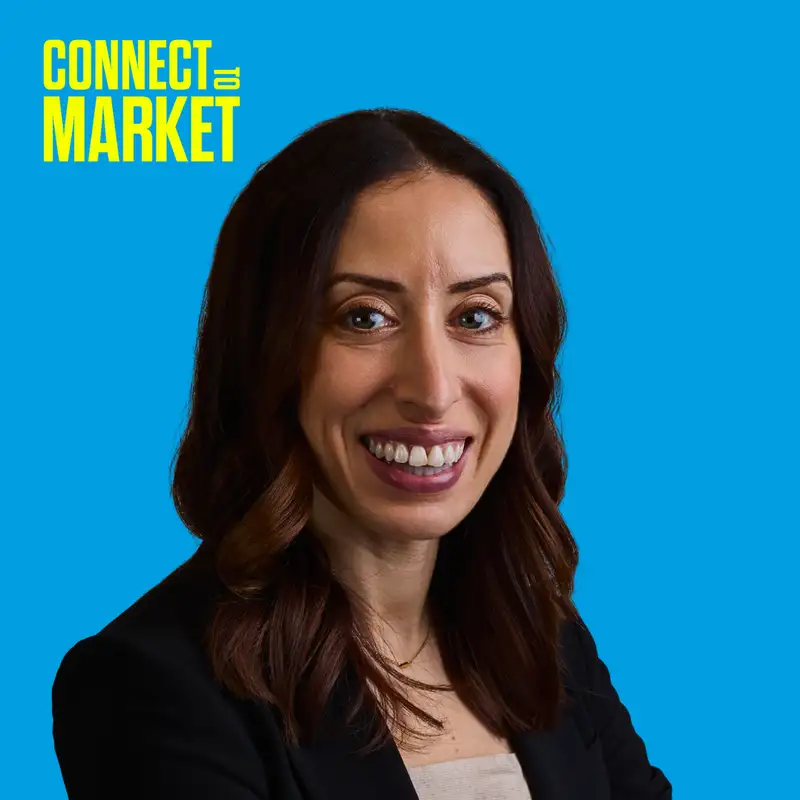
CTM - Elyssa Steiner
===
[00:00:00] Welcome to Connect to Market. I'm Casey Cheshire. Join the conversation with the marketing leaders driving the fastest growing B2B brands. We're sponsored by Ringmaster, building B2B podcasts and communities to reconnect you with your audience
casey-cheshire_66_07-02-2026_150844: All right. You hit the button and the adventure begins. I'm stoked. Why? Because I'm talking to an absolute badass. He is a fellow podcasting expert tying into the B2B world, tying into marketing, but he's also just a freaking motorcycle riding absolute badass, sim racing content wizard, and he's a marketing leader, a thought leader, again, podcast host, a storyteller, a coach.
You name it, he's done it. Podcast strategy may come out, B2C, B2B, you name it. Host of "The Absurdity," founder and podcast producer at Intuitive Podcasting, Ryan Becker. Welcome to the show, sir.
Casey Cheshire: All [00:01:00] right, we're doing this. You know, you get everything hooked up, you get everything going, and you start recording, and then it's just exciting. I am so excited to have this conversation today. We are gonna get into it, and I have a really special guest today. But who is she, Casey? Who is she? Well, let me tell you about her.
She is a seasoned CMO, a thought leader to thought leaders. The things that she is testing and coming up with and building and thinking about and sharing are things that other marketing leaders are noticing, and they want those results too, and they're enacting. She's also B2B growth accelerator, a brand builder, and she was recognized as a finalist for Gartner CMO of the Year back in 2025.
Let's go. Years of experience, 15 plus, and I think that the years just, we just cap it there. We don't, you know, if, if it was 45 years, we'd just say 15 years of... But,
Elyssa Steiner: Yeah.
Casey Cheshire: Lots of experience. And what is she doing? She's building an AI [00:02:00] fluent marketing organization. We're gonna roll up our sleeves and get into that.
She likes to scale execution, accelerate decision-making, and improve efficiency. Yes, please. CMO of Kahua, Alisa Steiner. Welcome to the show.
Elyssa Steiner: Thanks for having me. I'm excited to be here today
Casey Cheshire: My gosh, there's just so many things. I, I almost lost myself in that introduction. Like, where are-- There's just so much going on. You are very busy. How do you keep it all together?
Elyssa Steiner: I don't know. You made it sound like it was tenfold more than what I feel like my day-to-day looks like. So yeah, I don't know. I'm wondering the same thing.
Casey Cheshire: Well, I'll, I'll be your hype person. Next conference, let me know. I'll have the boombox. I'll just walk behind you and be like, "Here she comes." Um, so hey, let's get into it and ask this first question. I am just dying to learn from you here, and, and we ask the same first question of everyone. And in order to do that, I need the assistance of this giant blue foam finger over here.
So I have to ask you, Elisa, what is the number one thing that marketers need to [00:03:00] do in order to connect to their market?
Elyssa Steiner: Yeah. I think this one to me feels really easy, but I think sometimes becomes sort of like, "Ah, yeah, I kind of forgot about that," right? As marketers. And I think the biggest thing, honestly, is like closing the distance between marketing and the buyer. And it's really about how you get to be one-on-one meeting the customers, and there's so much that you can do with AI tools today, with what you can gather online and synthesize through AI tools. But really kind of connecting that physical gap between marketing and the buyer requires you to also get out into the field. So I just feel like when you think about connecting to the market, there's no better way to do that than to actually connect to those buyers and customers or, um, just getting out into the field.
And when I first joined Kahua, you know, that was one of the biggest things for me is I wanted to learn quickly. And yes, I could talk to a lot of the SMEs internally, meet our buyers, which is super critical, right? At the [00:04:00] same time, especially in a marketing role. But ultimately, I wanted to figure out how do I not only spend time with our sellers, but how do I at the same time get out into the field with them and meet some of our prospects and our customers?
So I would say that's really kind of the foundation of where to start, in my opinion. And anybody stepping into a marketing role should really think about that being foundational to how they get entrenched into how do we start to, like, market to our buyer if I don't know how they operate and think today?
Casey Cheshire: Yeah. It, and I mean, it just seems like such a no-brainer.
Elyssa Steiner: Right
Casey Cheshire: a, a, a, I don't know if you'd call it a cheat code, but the idea of just asking AI to synthesize all your buyer information, which I feel like directionally there's probably some, some goodies in there, but it, it's not the same thing.
What do you, what do you see as the difference? I mean, it's great to use the tools that you have, but there's something that's not quite in there.
Elyssa Steiner: Yeah. I think that, you know, I think the best way to think about AI when you look at, like, [00:05:00] just connecting to your market is, like, can scale what you know, but it can't invent what you don't, uh, what, like, what you haven't learned yet, right? And so in a way it can certainly pull together whether it's data, which I know we'll kind of dive into, like the, how we look at it here at Kahua and how I even kind of figured out how do I ramp up, right?
How do I get kind of collectively get to look at all of our, whether it's our call data, things like that. And that can certainly be that, that moment of synthesizing key themes. But a lot of times connecting what it is synthesizing to then getting out into the field and seeing it and experiencing it, you really start to get into the shoes of the buyer more deeply. And every buyer's got nuances to them, so it's not like going to one, you know, prospect call is gonna just be the end all be all, but it definitely starts to open up your mind to, "Oh, okay, like this is the buying committee. I didn't know there were all these [00:06:00] roles." I remember going to one, um, I think it was a prospect meeting I went to, and I forget what the role was, but there was some guy sitting in the room and I was like, "I've never even heard of that job title being in our, like, buying committee," right? Again, those are the kinds of things you unpack. So then if you marry that with the synthesizing of the collective data that you have access to and what AI can give you, now you kind of really unlock the gold in my opinion.
Casey Cheshire: I love that you're, you're combining the two, 'cause I think in the end it, it's not a let's shun AI or like we don't even need the human experience. There's that tension somewhere in the middle, like in that gray area. You need both
and, and, and they c- if you wanna, if you wanna scale rapidly, you need...
I mean, so why don't we think more people are, are, are, are leaning into like get out in the field, go do this? Because maybe they're not using AI, but maybe they're just staying in the office.
Elyssa Steiner: Yeah. I think that that's one of the challenges.
Casey Cheshire: Yeah
Elyssa Steiner: [00:07:00] started here at Kahua, I remember, um, just, like, right out the gate, I was like, "I want to meet every single person on my team." And I spent probably the first two weeks having one-on-ones with every single person. And even in the marketing organization, I could tell that there was this gap of them, them getting out in the field.
Not that they didn't want to. That wasn't the case. It was more of, like, it just wasn't the historical practice. so I could quickly tell, even though I was new to this industry and coming in and I had a lot to learn about our buyers, I started to tell pretty quickly that they also did, too, because that connection was not there, right?
And so they were leaning into just, like, what had they been told by the sales reps or what they could find through some of the tools they were using. And I think that, you know, one of the things I did out the gate, which, uh, became hugely impactful, not just for me and my team, but then for the organization, is within the first 60 days, I was like, okay, the revenue organization was [00:08:00] verticalizing. We had nine core verticals we were gonna go after And that was all new to the revenue team, and it was obviously new to me because stepping in. And so I said, "Okay, I want to develop ideal customer profiles. Let's create our ICP frameworks for every single vertical." And at first I was like, "It's mainly to help me learn them fast," right? And then I realized, whoa, this is powerful for my team because we were all kind of learning how we were verticalizing together at the same time, and that became a springboard. We ended up creating custom GPTs that we rolled out right out the gate for our sales reps that were tied to all the ICP work we were doing.
We used them to pressure test what we were crafting, so it wasn't like us living in a silo because they are SMEs in their, you know, kind of in their retrospect domain. And so, um, it became something that became foundational, to be honest, in how we started to develop our content strategies and, and so much of a ripple effect out of that, that to me, that's that, again, [00:09:00] connecting to the buyer piece that you really got to start to step into the shoes of them.
And to do that is this combination of leveraging the tools you have and getting out into the field. You know, I love to send where we exhibit at trade shows. I love to send a marketer to go, and a lot of times it's gonna be the one that maybe has responsibility tied to that vertical show that we're attending or maybe just needs to get out into the field because they've never done it before.
And I think that too is just a common best practice that if you can make that-- if you think about it from like a learning and development perspective of your people, gosh, every time I know I walk out of traveling to go meet customers or I walk out of a trade show, I come out of it with like, wow, I just learned X, Y, and Z about our customers or our prospects or how our sales reps talk about what we do to our prospects.
And I've noticed even in any of my team members and they come out of it like, "That was so valuable." Like, I got to really like also figure out how I talk about what [00:10:00] Kahua does. You know, kind of like test your own chops a little bit, right? And your own elevator pitch. And not just the sales reps that need to know an elevator pitch.
To be honest, everybody in the organization does. And so I think doing that creates this really great kind of internal momentum to really understand and then be able to, to take that along with the synthesizing of what AI can give you and the access to all the great tools we have internally, and start to really formulate a go-to-market strategy based off of understanding the buyer at such a deeper level than kind of just scratching the surface.
Casey Cheshire: absolutely. And I, I love the idea of using it for learning and development, but also those small moments of just somebody in line for coffee asks you what, you know, company Y- X, Y, Z,
Elyssa Steiner: do?
Casey Cheshire: Do you do?
Elyssa Steiner: Yeah
Casey Cheshire: say it. Do they understand what you're saying? Were there too many jargon words? Do they go, "Oh, okay.[00:11:00]
Do you compete with so-and-so?" Or do they go, uh, like,
what, what's their reaction? Do their eyes glaze over? Like, just a little bit of that human testing that might be hard to understand if you were to like, I don't know, craft an ad campaign, understand what's going on. Wow, I lost them when I said X, Y, Z.
Interesting
Elyssa Steiner: Yeah, and I think that's funny you say that because I think we oftentimes forget about those situations, and when they happen, we fumble if we don't throw ourselves into them enough. I mean, ev- I mean, I'm guilty of it. You know, the first time probably someone asked me, "What does Kahua do?" I remember I'm like, "Mm." Right? Like, you kinda... You're just not prepped for that. So I think that actually gets you into a groove and a rhythm of, oh yeah, this is how I talk about Kahua. And you also get to hear, how do the sellers talk about Kahua? And I think it just, again, creates such a better knowledge base for the individual getting exposed to those type of experiences
Casey Cheshire: The point about how does sales say it, right? So we know what you said in [00:12:00] line at, for coffee, but when you overheard sales at the booth or whatnot, what did they say?
And then that's how we, we learn that they're off using their own complete copy vocabulary, completely different.
Or maybe we're, we're, we're aligned completely, or they are onto something that, you know, we could add or change. Those little subtle things, if you're just absorbing as a sponge, I, could be so valuable.
Elyssa Steiner: Absolutely
Casey Cheshire: and I definitely heard you say that it's not that people don't want to, it's not like marketing's like, "Ew, no event."
Who doesn't wanna go to Vegas in
Elyssa Steiner: Right.
Casey Cheshire: Like, let's go. But no, it's like, it just hadn't been done before, so it took you saying, "No, we're gonna do this,
Elyssa Steiner: Yeah
Casey Cheshire: let's make this a priority," 'cause there's just so many good things that can come from it. How, how do you recommend others, you know, other organizations, those listening, marketing leaders, r- roll out this kind of strategy where they're not only using it for their own learning.
You know, you learned it, and then eventually your team, and then custom GPTs and all that. How do you [00:13:00] recommend other groups do it?
Elyssa Steiner: think that, mean, anybody can do what I did out the gate, right? I think as far as starting to just dig into, it's like this discovery phase in a way, if you think about it. And, you know, your first 30, 60, 90 days w- and that's why I said regardless of the role you play in marketing, whether you're a CMO, a director, a manager, should always kind of go through a discovery phase of like don't make assumptions that you know all, or that even if you come from the same industry, that you just, you know, wanna take what you know and go, right?
You really gotta kinda interject yourself into the business that you're stepping into and understand how do they win in the market today, right? And how do they position it? Do, is, does there need to be an evolution in how we talk about what we do? And I remember, gosh, I think it was my, like, second or third week in, and we go to an executive offsite, and we actually went in with this idea of like, "Hey, let's simplify how we [00:14:00] say what we do at Kahua." And walking out of that, like three weeks in here, was like, "Okay, here's kind of our new mission statement of what we do," right? And I think part of that too is just an exercise internally to say we really need to make sure that it's extremely easy, despite whatever type of buyer you are, to understand what we do here at Kahua. then if we can do that, we can flip the script and make sure our sellers know how to articulate that too. So I think anybody stepping in a marketing role, like, look, my best recommendation is go through a discovery phase, understand the buyers, meet with the sellers out the gate. That's the best place to start. Um, I love when marketing and sales are just jiving and working hand-in-hand. I think it's funny, I, I've always had, like, other leaders who are like, "Oh, is there a conflict between marketing and sales?" And there, I mean, there are certainly organizations that experience that, but I think a lot of times that happens because they're not on the same page,
Casey Cheshire: Right
Elyssa Steiner: they're fighting [00:15:00] priorities.
And for me, I come from a sales and marketing background, and I've always looked at it from a lens of like, hey, I need to know what they're focused on because at the end of the day, if they're selling stuff they wanna sell that they're having success with, that's where they're gonna spend their time.
Casey Cheshire: Yeah.
Elyssa Steiner: to understand that and understand there are always ways we can help them improve, sure. But at the end of the day, if we are aligned on our top priorities and our goals, then we're gonna be going in the right direction. And I just think that's why so much of starting out and stepping into a new organization is just, like, talk to the sellers and then ask them point blank. Like, I remember some of my team was, like, nervous to ask the sales reps of like, "Hey, can I sit in on a call?" They actually love it
Casey Cheshire: They do
Elyssa Steiner: want to, especially marketing. They're like, "Yeah. Like, we would love for you to figure out how you could help me more," right? Like, they get so excited. I think we think, "Oh, are we overstepping?" But actually they're like really excited when you [00:16:00] ask them to do that. So I would say, like, sit in on calls. Um, if you can go to onsite visits, go to onsite visits. That's what I love to do. Like, throw me out into the field. I think I joked, like, a couple months in, was like, "Hey," what is the kind of joking statement of like, "Chief, throw me in," or whatever, right? I'm like, "Just throw me in." I, I can do well in a prospect meeting and/or a customer meeting, but I just love getting out into the field and having that every quarter of just like, okay, what's the next kind of customer or prospect meeting I'm gonna go to?
I make that kind of a quarterly priority for myself of at least once a quarter, um, if not more than that, that I just take advantage of those opportunities and go out and meet with the customers. Because every time I learn so much, and I have the, you know, the grateful opportunity because we have so many verticals, a lot of times I'm diversifying that,
Casey Cheshire: Yeah.
Elyssa Steiner: Okay, I went to an education lunch and learn and, you know, I, I went into Seattle [00:17:00] for an energy one, right? And so just getting exposed, 'cause you see they operate very differently, um, and there's different buying committees and different nuances that they care about. So again, those things are unpacked by mixing in that in-person experience, and I encourage it.
And I, I, you know, initially I think there was a little bit of pushback of, "Oh, well, do we need to send marketing to a trade show?" Right? And I was like,
Casey Cheshire: Right
Elyssa Steiner: do." And you know, I limit it one marketer for where we exhibit, one, so that we make sure the booth and all the logistical stuff get executed the way we want Kahoot!
to show up, but then two, to get them to learn, right? And I think that, you know, to me, one person and what they get out of that, that's a very little ask that has such return that, um, you know, I'd be surprised if no- if, you know, leadership didn't support that, to be honest.
Casey Cheshire: Yes, super small cost for [00:18:00] years worth of great marketing out of them. I-- You know, you mentioned the, the sales calls and that it almost, it kind of f- can feel taboo to like a, like a early marketer, be like, "Ooh, can-- Do we get to hear?" No, you don't get to hear that. It just happens and it... But you're right, they love an audience, typically.
Sales is like, "Come on in." I remember joining one as a young marketer, and, um, and I was just exciting. This is sort of like pre-Zoom days. That dates a lot. But we're in, in their room, they put it on speakerphone, and they're like, "Hey, it's so and so." And the first thing the prospect said was, "Who are you guys again, and what do you do?"
And I was like, "Oh my G-" And he explained it, no big deal, great sales rep. But I thought, "We can fix that." Like, we can make it so that before you chat with someone, they at least know who you are and what you do. Like, why, you know, this sounds so cold. This doesn't have to be cold outreach. And so it just got my brain thinking all the different kinda nurtures we could do and the [00:19:00] different things we could put into place and that was just from one phone call,
you know? It's amazing.
Elyssa Steiner: I know every visit I walk out and I'm like, light bulbs go off. I'm
Casey Cheshire: Yeah
Elyssa Steiner: It's just... And that's why I encourage it
Hey marketing leaders. It's Amanda here from Ringmaster B2B, podcasting in today's market. B2B buying is built on one thing, trust, and there's no better way to build that trust than through a podcast that builds connection at Ringmaster. We hope you launch and grow shows. That will amplify your brand and can help drive real demand.
The best part, we handle all the heavy lifting so you can focus on the big picture. So if you've been thinking about starting a podcast for your brand or taking your existing one to the next level, visit ringmaster.com to chat and book a call.
Casey Cheshire: How do you wrangle so many verticals? You, I think you were sharing earlier there's just mult- there's like multiple top ones and then you had sub ones. There's a lot of verticals. How do you wrangle that?
Elyssa Steiner: Yeah. I think that, you know, like I mentioned earlier, we [00:20:00] have nine core verticals, but
Casey Cheshire: Right
Elyssa Steiner: subparts to that. There's probably at least 14, if you think about it. Um, but what we've done is we've kind of clustered them. And so we've clustered them by common challenges that they face, um, the problems that those specific buying committees are typically coming up against, and what surfaces as, like, the top ways in which we solve some of those Yeah. and there's consistency in some areas.
Like, some are really tied to more of the public sector and therefore, like, audibility in what they report out needs to be really clear, and they need to be able to trust the data they're getting, right? Because they're getting scrutinized potentially by, you know, the public, literally, the county, the communities, right?
And so, um, how they manage their funding matters. If you think about the education sector, and they're getting potential funding that's tied to their next construction project for whether it's their dorms or their new business center, if we think about a college or [00:21:00] university. And so, um, sources of funds and fund management become extremely critical. But then if I go down into, like, our general contractor segment, a lot for them is what we've, uh, you know, unpacked is, like, the ability to manage all their documents, the ability to manage upstream and downstream, their subcontractors all the way up to their owners that they're servicing. So there's nuances, and th- what you tend to find is kind of di- there's commonalities across many of these verticals. And so one of our, like, kind of efforts… It really depends on the funnel though too. So if you think about if I'm trying to go after specific brand campaigns, I might have clustered them at a higher level to create the awareness side. But then as we push them downstream, the second we know what vertical they're in, we're immediately pushing them through far more personalized content, right?
Casey Cheshire: Got it. Yep
Elyssa Steiner: developed out, out that… You know, right off the back of creating all the ICPs, we quickly went [00:22:00] into creating, um, all updated nurture campaigns for every vertical. And then that's rippled now into how we're scaling our ABM campaigns, and we're… And the thing though- I think what's helped dramatically is that the entire revenue organization verticalized. So, you know, the sales reps are all tied to verticals. They have their pods. And then my marketing team, I've got solution marketers that I've also aligned to those pods. So they become kind of this bridge gap of, like, these SMEs for their pod as well, which creates the focus. And then they're feeding that back into our content team.
They're feeding that back into our digital team. And, um, that is then what's helping us to Balance the effect of how do we make sure the second we know what vertical a buyer is in, that we take them down the most personalized path we can? If we don't know, then how do we make sure that we're kind of what we do [00:23:00] have the basic information on them today, you know, thank goodness to a lot of AI tools that we can leverage also in that earlier part of the funnel, and making sure we're still hitting some of the common challenges that they're facing and starting to get in, get them into our funnel, right?
So I would say it's kind of a multi-pronged approach, but that's marketing, right? It's multi-channel. There's slightly different variations as we go across the different channels based off of the different stages they're in. But one thing I have learned is, gosh, the sooner you know what the buyer is, like who they are, what vertical they're in, and the challenges they're facing and their role, so you know maybe what areas of their pain points are most common, then you gotta start personalizing how you talk to them because that's what's really gonna help move them and walk alongside sales, where sales gets excited when they know you're speaking in the right way to their buyer. They get frustrated when it's either too generic or it makes no sense, right? They're always [00:24:00] gonna call you out in the marketing house if you're doing something that makes no sense to their buyer.
Casey Cheshire: Right
Elyssa Steiner: so I think that that's been a good triggering point for me is early on when we were clustering, there was a bit of nervousness between our sales reps, and then now as we've just continued to scale and scale and scale, um, you know, they love it the more that we continue to personalize the content that we're creating and the way that we're reaching out to our specific prospects.
Casey Cheshire: Man. And, and you had said earlier that you would actually build out custom GPTs.
and and would you, would you like bounce an email campaign off them or bounce one of the nurture
Elyssa Steiner: Yeah
Casey Cheshire: stages and be like, "What do you think?" You know?
Elyssa Steiner: Yeah. Yeah. In the early days, it's... So I think it's so funny when I think about early days, I'm like, "Oh, that was January, February," right?
Casey Cheshire: I know. I know
Elyssa Steiner: at which AI is changing how my team is operating, it, like someone will say, "Oh, where do you think, you know, we'll be in three months or six, six months?"
When someone says six months, I'm like I have no clue because [00:25:00] we have accelerated so fast in the last six months. When we first started, it was like, "Okay, let's build custom GPTs." Great. Did that. Rolled that out. We used it for both empowering the sales reps to be able to craft emails and just basic kind of stuff, but being able to frame it around the actual buyers and that vertical.
And then we were using it to create content, and then it's evolved now. Now my team has various skills and agents that we leverage at different points. Like now we have an email skill that literally based off of our best practices for all of our emails, that it'll score it and give you recommendations of how to tweak it based off of what we fed it as like great type of framing for emails. And that skill is then used across the board, right? Doesn't matter the vertical, because it's checking it across just the framework of the skill. Um, but we've also accelerated our entire approach to ABM, which this one gets me the most excited. I love talking and sharing about this one, is [00:26:00] I remember back in...
And this is a great example of why when someone says, "Where do you think you'll be in six months?" I'm like, "Okay, hold on." In January and February, I remember meeting with our VP of sales and going, "Okay, so we're gonna, you know, revamp as they've completely verticalized. Now they've got all these like top one and target accounts and all this, these hot one hundreds."
And I said, "Okay, you're gonna have to pick 18. We're just gonna call it the Magic 18. This is gonna be, uh, that's our capacity."
Casey Cheshire: Right
Elyssa Steiner: then it was like the stress of like, "Oh gosh, we can only pick 18," right? then we put together an entire, like we brought in a new tech stack tool that I had heard about and built out an ABM agent with them, and now the conversation has completely flipped.
We said, "Hey, we can now scale at a pace at which we never thought we could have." And now I go back to our VP, this is a c- like I think back in May, June, and said, "Okay, guess what? no more 18. There are at [00:27:00] minimum 50 one-to-one accounts and 350 one to fuse. And oh, by the way, at the same time, it's like the only reason there are 400 total is because it's like budget. the constraint. It's not a people constraint." And so that's been a great example of like, we just totally flipped the script, and I get so excited to share that because we're actively deploying and my email lights up when like Asana tasks are completed and ABM campaigns are getting lit up left and right.
And I'm just like, "This is so cool." Like, this is so exciting to see, um, how much my team has also embraced it too, and, and just keeps pushing and pushing the boundaries by leveraging AI, but keeping that human in the loop element, but leveraging AI to take the kind of the busy work out so that they can focus on the strategy and then it can execute from You think about all the tiny little tasks that come out to rolling out an AB- a digital ABM campaign [00:28:00] and being able to push that and deploy that through all of our platforms. So many efficiency gains through that whole process that we've made, and that's what gets me excited about, like, how we layer in AI into everything that we do every day.
Casey Cheshire: Man, and I, I gotta imagine the results of having a one-to-one, you know, tier one ABM treatment is just great for converting that account
Elyssa Steiner: Especially in like w- we're like, you know, enterprise SaaS sales, right?
Casey Cheshire: Right.
Elyssa Steiner: We sell software,
Casey Cheshire: Right
Elyssa Steiner: we sell to massive industries, infrastructure. Um, you know, we do a lot in the federal space and the abil- these are long, they can be long sales cycles, right? And so ABM becomes a critical component of that.
And I think historically, before I was here at Kahua, they were doing ABM, but it was very minimal because it was really difficult to manage, right? [00:29:00] And now we look at ABM as like a full channel approach and, you know, how are we doing things in person? It's not just digital. And, and our ability to do that now and to create the full strategy is because of the tools that are empowering us to kind of like the time-sucking tasks out of the way, still be able to execute now at scale and efficiency gains, and then now be able to look at the bigger picture, right?
Which is what I love seeing my team get involved in. It's like, "Hey, you now get to be a part of strategy. You get to drive strategy in your role because you have tools that do the busy work to help you, right? And then get you to focus in on the reviewing and the editing." There is nothing more critical to a marketer than being a really good editor now, and I think that that's that human in the loop. If you just push it over the fence, it goes back to all that AI slot people talk a lot about right now. [00:30:00] Um, and you can see that. Like, you can see the ones that are using judgment, and you can see where there's just like copy and paste, and is this good enough, right?
Casey Cheshire: So yeah, editors and wranglers, right?
have you moved in that direction in, in like how many of your t- how much of your team is human?
Elyssa Steiner: Oh, I mean, I don't look at, like, the ratio of, like, w- is there a specific, um... I mean, you know, we're looking at AI in everything we do, right?
Casey Cheshire: Yeah.
Elyssa Steiner: oh, this role 100% is just AI, 'cause I've evolved roles, right? I think part of it's been getting them out of... you a really great example. I-- We've got about a team of 18 or so individuals on my team, and I had one individual, her role was specifically around campaign specialist, right?
So she was living and breathing in HubSpot and executing a lot of our campaigns, and we were working with her on a growth plan, and how do we get her into [00:31:00] a solution marketing role? I'll tell you, uh, this is one of my favorite conversations, and I think this is what I love about people embracing AI in, in a marketing role. It's not about replacing your job, right? She came to me and was like, "Hey," as we're working on this growth plan to get her to this other role that she really wanted, like, "Hey, so I created this specific agent to do these things that are tied to what my role is responsible for today, so that I can get this busy work that is repetitive off of my plate so that I can actually move into this strategic role as a solution marketer." I was like, "Yes." Right? Like, that's
Casey Cheshire: Totally
Elyssa Steiner: That's exciting to me. It's like, you know, I think about five years ago interviewing marketers that are coming out of college, and they all wanted to be like, "Oh, I wanna be a, a strategist. I wanna be in strategy." And I'm not sure they really understood, like, what does that mean, right?
Casey Cheshire: What is that?
Elyssa Steiner: But guess what? [00:32:00] T- now they get to be. If they embrace AI into doing the task-oriented stuff and helping them,
Casey Cheshire: Yeah
Elyssa Steiner: get to become really good strategists, and I think that's what's exciting to see is, like, everybody can play now a much more active role in driving strategy. think part of the proactiveness is watching them figure out, in order to do that, what are the things I need to do that are repetitive every day to get off of my plate? I think, uh, that's when I see kind of light bulbs go off within my team, and so many examples of it in the last six months I've witnessed, and that, that's exciting to me
Casey Cheshire: Man. Yeah. I mean, just seeing those light bulb moments and also seeing them on your team as well. Um, uh, my next question for you really is like, who are you? How do you know these things? Can you take me back in time? Little you, did you know you were gonna be a [00:33:00] marketing leader and, and going out in the field and getting your team out there and learning more about customers and wrangling a million verticals?
What was it like,
Elyssa Steiner: did I know I was gonna be a marketing leader? I, you know, I don't think I would've called that if I was in college. Um, I think mainly because it's funny, my background, uh, while I was finishing my undergrad, uh, in business and marketing, um, I was working at a, I won't name the name, a really large big box retailer.
And, and I always thought I wanted a career in fashion, like since I was little.
Casey Cheshire: Nice
Elyssa Steiner: I'm just gonna, I'm gonna be a buyer, and I, this is the path. I'm already working for the retailer I wanted to work for in my career. I'm like, I'm just gonna work my way up," right? I graduated college.
I'd been there a couple years and was excited to kind of continue figuring out what my growth path was there. And I sort of started to observe that the people sitting [00:34:00] in the buyer roles at that time in my life, um, were like, their life was their job. A lot of them weren't married, a lot of them didn't have kids. And I thought, "I just don't know if that's for me," right?
Casey Cheshire: Like, ah, it
Elyssa Steiner: also
Casey Cheshire: as fashionable as it, you know
Elyssa Steiner: Yeah. Like, it sounded more fun, um, but then, like, behind the curtain it was, like, kind of a different story that I felt like wasn't maybe a path I was really kind of invested in being my path.
Casey Cheshire: Right
Elyssa Steiner: so f- funny enough, just through connections, which is why I am such a big proponent, like, of, like, hey, always be a part of networking and, uh, like, groups or whate- Like, go on coffee dates with people that, you know, you just wanna connect with.
Like, I always love it to encourage that because it was through my dad actually that I just decided to go work for a startup Early on, went in as a sales rep. So this was my early days starting in sales. I mean, I came from sales at, from the retailer [00:35:00] side. Going as a sales rep, man, that was one of the toughest things.
And I find it funny when, you know, we have got internships that they go through the SDR roles, and I'm like, "I've been in your shoes,"
Casey Cheshire: Yeah
Elyssa Steiner: it's not the funnest role. It's a hard role. Um, it's a really hard role. But w- oftentimes when I see people go into marketing who have come from any sort of sales experience, I'm like, like I...
They've got some other lens in which the way they look at marketing, 'cause they've lived it, right? Um,
Casey Cheshire: 100%.
Elyssa Steiner: I came, uh, through that, and I just, I think I got super lucky in the sense of I got the opportunity to go to a startup. I was very young in my career. Honestly, not until I left, I was there for six years, helped the company grow from 1 million to 21 million in revenue. Um, we were sort of disrupting a space at the time with technology, so I got to be on the tech side. I ended up leaving there as the VP of sales and marketing. Again, not a path I expected when I walked in the door [00:36:00] six years prior to that. And but what was really cool is I got exposed to really how you build a, a business, and I didn't recognize the value of that until then I went to my next career. And I had an opportunity to exit because I was kind of poached in the industry to say, "Hey, we're building a marketing team. Would you like to come in and define what marketing does for our company and build a team?" And I thought, "Oh, this is kind of my own little startup," right? within a company that was doing about like 60 million in ARR, and thought, "This is probably a good next step in my career."
And so I made the shift, and it was one of the best decisions I ever made, and that's really when I started to hone in on like a defined lane in marketing and building my career in marketing. But so much of, I think, why I had been successful in my like kind of through that journey getting to where I am today as a CMO honestly [00:37:00] because of that startup experience,
Casey Cheshire: Yeah
Elyssa Steiner: I got exposed to defining the product strategy.
I got exposed to like building pricing models, like things in my early 20s, like are just so uncommon, right? And so I became such like this business operating mindset, almost entrepreneurial in a way,
Casey Cheshire: Yeah
Elyssa Steiner: and I just didn't realize the value of that until I started seeing it come to life in how I looked at the world in my role, um, after that.
So that was definitely a pivotal moment for me. And, and then that's also where the turning point was for me of just like really kind of building a lane and saying, "Okay, I really wanna lean in to marketing being kind of the path for me going forward." So yeah
Casey Cheshire: Wow. And, and here you are.
how would, how would, if I bumped into you at an event with coffee, how would you explain what you do at Koa or what Koa does?
Elyssa Steiner: okay, great question. Um, what does Kahua [00:38:00] do? Uh, we are a leader in software for construction project management. So everything from the moment you start your build design to full asset life cycle, we help you manage that project from start to finish and also post-finish. So from being able to operate, maintenance, everything beyond the actual project at scale so that you can run all of your projects efficiently,
Casey Cheshire: Oh my gosh
Elyssa Steiner: through Kahua.
One platform, one source of truth, uh, configured to exactly the way you wanna manage your projects
Casey Cheshire: Well, round of applause. We just drop a little applause in there. , I mean, first of all, it sounds like you've met a few people at coffee and, and been able to explain that and workshop that by having those conversations. So it's a good reminder for everyone listening, like, hey, if you were to be asked that, could you explain it in that way?
And as you're explaining it, I... A friend of mine who owns a, uh, large, um, regional construction company, I'm thinking I gotta, I gotta [00:39:00] ping him later and say, "Hey," 'cause I have definitely have heard the challenges of, you know, if, if you, if you miss a, a dot here or if, if, if you go off on your project early on, you could miss-- You could owe money by the end of it.
Elyssa Steiner: Yes
Casey Cheshire: like these are really big, especially the, the, the larger projects. So yeah. Wow. Cool. Cool
Elyssa Steiner: I will say to the audience, we did not plan that. You did not plan on asking me my elevator pitch. So there we go.
Casey Cheshire: It's true. I-- we did not plan that.
Elyssa Steiner: I think that's the key, right?
Casey Cheshire: I, I did kind of surprise you with that. Hadn't thought to ask you that, but, uh, but you, you absolutely crushed it. I have a bit of a hypothetical question for you next. Since you totally nailed that surprise question,
Elyssa Steiner: Okay
Casey Cheshire: Are you g- are you down for a little hypothetical?
Elyssa Steiner: Let's do it
Casey Cheshire: All right. You see, I may or may not have a time machine over here in New Hampshire. So you're doing a customer event in Boston, you come on up, it's in the backyard covered in a [00:40:00] tarp, let's just be honest, maybe, hypothetically. And it's a particular kind of time machine where you get to go back in time and meet younger you, straight out of college, haven't had those other experiences yet.
You got the marketing degree and you're kind of bright-eyed, bushy-tailed, or actually maybe even earlier, but go way-- as far back as you want. What would you say in that conversation to, like, that, that earlier you in your career?
Elyssa Steiner: Yeah. Um, gosh, I would tell myself, like, "Don't let comfort make your decisions." And I would anchor in on that a lot because the, uh, there was a line I had, I had heard from this cohort I belong to called Men and Women of Discomfort, and it was like, "Hard choices, easy life. Easy choices, hard life." And I think, um, there's so much truth to that.
Like, easy choices often feel [00:41:00] safer in the moment, but they aren't the choices that shape you in your career and in your... And in my life specifically, I think that's why I'd say, like, lean into discomfort. Not like a discomfort of like, oh, like, I, I'm suffering discomfort. Nothing like that. I would say, like, lean into what feels like an uncomfortable decision sometimes.
And I, I remember this when I decided to leave the startup and going into this, like, marketing lane, and I remember thinking to myself like, "Well, I'm young." Like, "What if I don't like this?" I'm really good at sales, right? I was really good at it, but I was like, "I don't know if that's really where my passion is."
And I think, like, that to me, and I'm not a big risk-taker if I'm being honest. Like, I love i- like in my personal life, okay? I think in, in business I actually do love to kinda, like, let's try it, let's test it, which is funny because I think then about in my personal life, why don't I apply that? Um, not [00:42:00] sure.
Maybe it's just like the business side versus the personal side. But you know, I'm really thoughtful about making, like, career changes, and even when I came to Kahua, very, was very thoughtful about the thinking process. But, uh, I would say, like, a lot of times I think people instinctively do what is most comfortable, and even in your own growth within your current role, right?
Um, and I love to push the boundaries for even individuals as we try to push them out of their comfort zone. So I would say that that would be something I would really wanna tell my younger self because I do think that because of that personal trait in me of being less inclined to, I almost wish I would push myself more to do that, to be honest.
But I've noticed it through kind of the, the evolution of my career. Um, but I would definitely say for others that are listening, like, don't be afraid. I think that sometimes [00:43:00] easy choices feel like the safest ones, but a lot of times they aren't the most rewarding ones that help you grow and to really get you to the level that you wanna be.
Casey Cheshire: I guess the follow-up question to that is, do you think you would listen to yourself if you came swooping in from the future?
Elyssa Steiner: Knowing the, my personality, um, I think I would, but with, uh, caution. That's probably
Casey Cheshire: Yeah
Elyssa Steiner: that's prob- You know, 'cause I, I am very methodical in kind of like my decision processes in a way, and I
Casey Cheshire: Yeah.
Elyssa Steiner: I don't wanna make a knee-jerk reaction always. Like, but I do think a part of that is leaning into, I can st- you can still be methodical.
It's not about like, "Oh, I'm just gonna say yes because I should just say yes." You can be methodical, but it's about leaning into like, does this decision also maybe bring a bit of discomfort in making it? Sure. And I think that's the piece I would wanna really lean into [00:44:00] for myself is like, it may feel uncomfortable, but the outcome may be far more rewarding
Casey Cheshire: What was that group you had mentioned too?
Elyssa Steiner: Yeah. It's called Men and Women of Discomfort. So, um, all about, like, really leaning into honestly, like, becoming the person you wanna be. Um, and a part of that is leaning into discomfort in all aspects of your life, right? Whether that's, uh, you know, personal with health and nutrition or work-related stuff.
Um, it's kinda like a little cohort that, you know, you can do for 90 days, if you think about, uh, 75 Hard, those kinds of things. Um, but it's really been ingrained into me. It's actually become such a way of life for me, and it's really changed my thought process in just who I am as a person, what I prioritize in my life, and how, and how I also, um, I think lead as a team.
It's, it's evolved me as a leader as well
Casey Cheshire: Yeah. Wow. Yeah, [00:45:00] and just it's not, it's not the safe and comfortable things that... The, the best rewards aren't behind those,
you know? Yeah.
Elyssa Steiner: Mm-hmm.
Casey Cheshire: Wow. Man, this is great. Hey, where do you want people to reach out and connect with you, throw out some, you know, links or social, whatever you think best, if people are hearing this going, "Man, we need to connect"?
Elyssa Steiner: Yeah. I mean, I love to always connect with other marketers. Um, you can find me on LinkedIn, Alisa Steiner. I'm happy to connect there. Uh, you can also easily find my LinkedIn on our new Kahua website under our leadership team too. So you
Casey Cheshire: Okay
Elyssa Steiner: me in those two places. But yeah, always happy to connect virtually or in person. Um, but yeah, it's really fun to be here today, Casey, and just to kind of chat with you all about things, you know, connecting to the market, but from a marketing lens and, and how I really kind of see that as such a critical part to what we do here at Kahua.
Casey Cheshire: thank you because, like, I feel like it was a [00:46:00] masterclass on everything from AI to verticals to learning more, getting out of the office and, and learning, walking in the shoes of your customers. So man, I just, I have all these notes. I have some to-dos I gotta get. Like, I'm like, "Okay, I gotta, I gotta...
Let's do this. Let's do that." Um, man, so crazy. And then who even knows what three months from now we'll do, right?
Elyssa Steiner: I know.
Casey Cheshire: Absolutely wild.
Elyssa Steiner: I think
Casey Cheshire: but
Elyssa Steiner: exciting though. I think
Casey Cheshire: oh my gosh
Elyssa Steiner: exciting, the pace of technology and, um, and yeah, I think the impact becomes even greater of what we can do if we lean in. So it, it gets me excited
Casey Cheshire: myself as well. Like, we'll fast-forward and chat again in a couple months and have you back on, and you'll be like, "Oh yeah, we're doing this now. We have cyborgs," you know, and all these things. And I'm like, I don't, I won't even know what's going on over here. But, um, yeah, thank you so much. And for those that are listening, thank you all for listening.
If you like this, share with someone else. If you, if one of your friends, uh, is running a [00:47:00] team and they've got verticals coming out their ears, tune them into this channel and get out in the field. Like, if we can learn anything from Elisa, it's like, let's get out. Let's get out there. Let's meet, let's shake hands, let's connect to our market.
And with that, Elisa, thank you so much for being on here.
Elyssa Steiner: Yeah, thanks for having me
Casey Cheshire: All right, everyone. This has been a crazy cool, very exciting episode of the "Connect to Market" pod. We will see you all next time